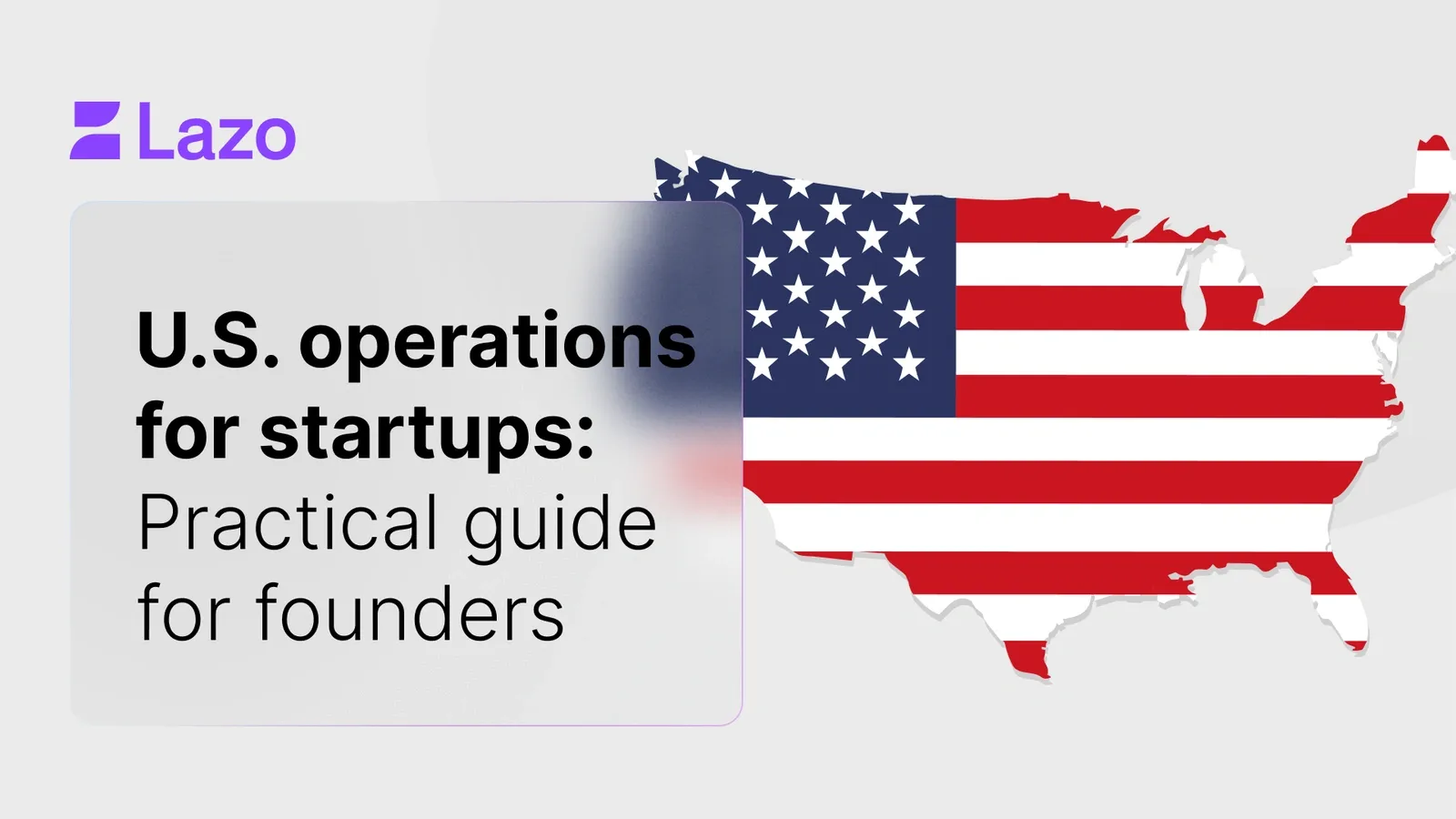
U.S. operations for startups: A practical guide for founders scaling from day one
A practical guide for founders scaling U.S. startups.
Most founders don’t lose sleep over product decisions.
They lose sleep over the things no one explains clearly: taxes, compliance, incorporation, and whether they are “doing things right” in the U.S.
If you are a founder building or scaling a U.S. company, especially from Latin America or abroad, this guide is for you.
It explains what actually matters operationally, what investors expect, and how to avoid the most common mistakes we see at Lazo.
What you’ll get from this guide
📌 What U.S. investors expect from startup operations
📌 Which legal and tax obligations founders often miss
📌 Why clean structure matters more than speed
📌 How compliance impacts fundraising and runway
📌 When it makes sense to work with a partner like Lazo
Why U.S. operations become a growth bottleneck for founders
Founders move fast. U.S. systems do not.
Once you incorporate in the U.S., you enter a world where structure matters as much as traction. Even early-stage startups are expected to handle:
• Federal and state tax filings
• Corporate governance and ownership records
• Payroll and contractor compliance
• Multi-state obligations as you hire remotely
• Investor-ready financials
Many founders assume they can “fix this later.”
That assumption usually becomes expensive.
What founders are legally required to handle in the U.S.
1. Incorporation and entity structure
Most venture-backed startups use a Delaware C-Corp because of:
• Predictable corporate law
• Investor familiarity
• Clear equity and governance rules
Delaware does not reduce taxes by itself. It provides legal clarity.
Source: Delaware Division of Corporations
2. Federal tax filings, even with no revenue
A common myth is that startups do not need to file taxes until they make money.
In reality:
• U.S. C-Corps must file Form 1120 annually
• Foreign-owned entities often must file Form 5472
• Penalties apply even with zero revenue
Source: IRS Instructions for Forms 1120 and 5472
3. State compliance and nexus
Hiring one employee in another state can trigger:
• Payroll withholding accounts
• State income or franchise tax filings
• Ongoing reporting obligations
This applies even if you are incorporated in Delaware.
Source: U.S. Supreme Court decision South Dakota v. Wayfair and state revenue departments
Why investors care about operational clarity
During fundraising, investors rarely ask only about growth.
They ask for:
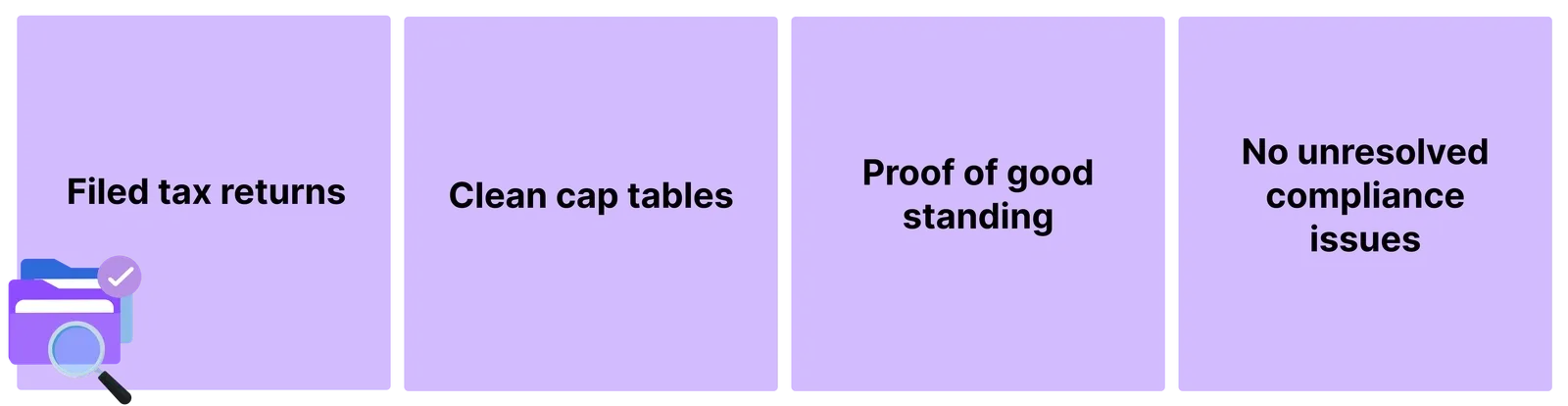
Operational debt slows rounds, increases legal costs, and creates risk.
Clean operations signal maturity.
The most common mistakes founders make
At Lazo, we consistently see these issues:
• Not filing taxes because the company is “inactive”
• Mixing personal and company expenses
• Hiring before registering in a state
• Ignoring foreign ownership disclosures
• Leaving compliance until due diligence
• Using multiple vendors with no single source of truth
None of these are hard to fix early.
All of them are painful to fix late.
What founders should prioritize instead
Strong startup operations are not about overengineering. They are about focus.
Founders who scale smoothly do three things:
- Set the right structure early Entity type, ownership, and governance aligned with growth plans.
- Keep clean, simple financials Bookkeeping that matches IRS and investor expectations.
- Centralize responsibility One partner who understands tax, compliance, and fundraising realities.
How Lazo supports founders
Lazo exists to remove operational friction for founders.
We help startups with:
• U.S. incorporation and structuring
• Federal and state tax compliance
• Foreign-owned entity filings
• Bookkeeping aligned with investors
• Registered agent and U.S. address services
• Company dissolutions
• Fractional CFO and Controller support
Most importantly, we explain everything clearly.
No legal jargon. No black boxes. No surprises.
From Lazo’s experience
Founders do not fail because of taxes or compliance.
They fail because those things steal time, focus, and trust at the wrong moment.
Our role is to make operations predictable so founders can focus on building.
What founders should do next
If you are building or scaling a U.S. startup, ask yourself:
• Are my filings up to date
• Is my structure investor-ready
• Could I explain my compliance setup in five minutes
If the answer is unclear, that is your signal.
👉 Talk to Lazoand get your U.S. operations handled with clarity.
You did not start a company to manage paperwork. We help you scale with confidence, structure, and trust from day one.