Accounting for SAFE & Convertible Debt: From Funding to Equity
Convertible notes and SAFEs are simple to raise but complex to account for when they convert to equity. This guide walks founders through the key accounting steps, common mistakes, and best practices to ensure your financials remain clean, compliant, and investor-ready.
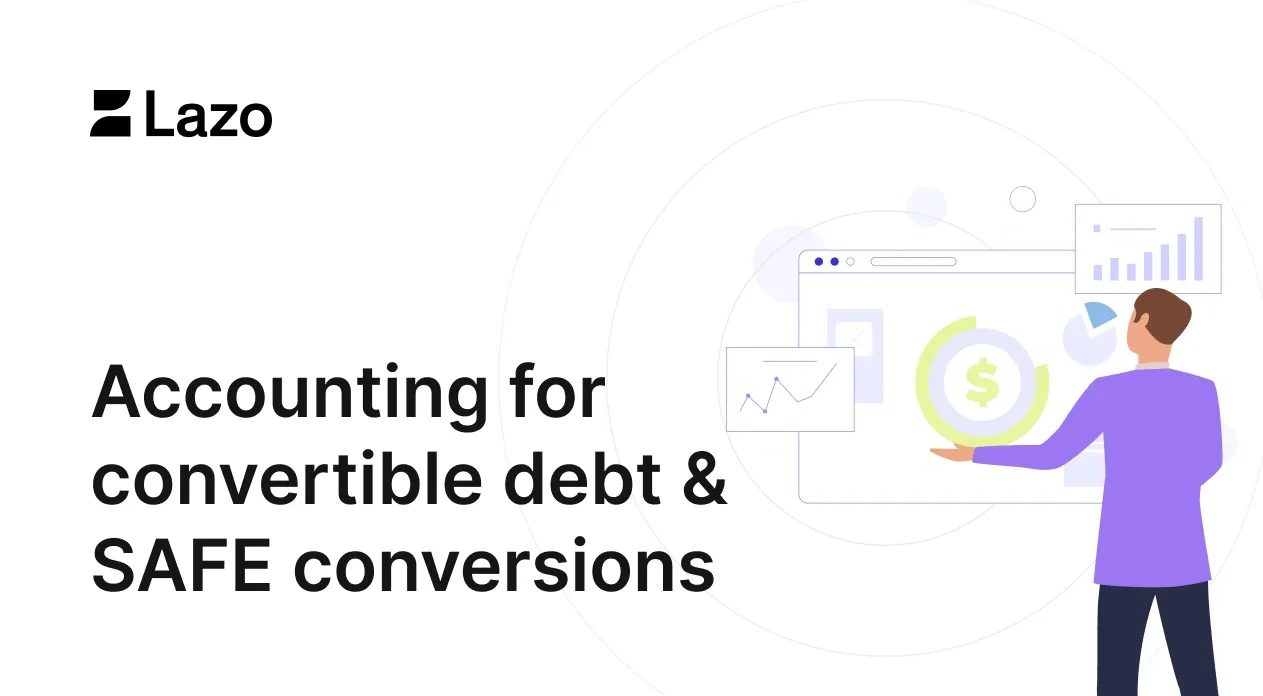
Raising capital through Convertible Notes or SAFEs (Simple Agreements for Future Equity) is common among early-stage startups. These instruments delay valuation negotiations and streamline funding — but the real complexity begins when they convert into equity.
That conversion has significant accounting and financial reporting implications that many founders overlook. If not handled properly, it can lead to messy cap tables, compliance gaps, and audit red flags.
👉 With Lazo, you can keep your books clean and investor-ready. Schedule a call to make sure your conversions are handled correctly.
❗Why this matters
The appeal of SAFEs and Convertible Notes lies in their simplicity until it’s time to record them. Their conversion into equity during a priced round isn’t just a cap table update. It impacts your:
- Financial statements
- Owner’s equity structure
- Deferred valuation adjustments
- Tax positions
Accounting for this correctly is crucial for investor reporting, future due diligence, and audit readiness. Learn more aboutBookkeeping**services for startups.**
📊 Accounting differences
Before diving into the conversion process, it’s important to understand their accounting nature:
- Convertible Notes are typically classified as debt. They accrue interest and have a maturity date.
- SAFEs are generally treated as equity-like instruments, though classification depends on the specific terms and legal interpretation.
The accounting treatment prior to conversion differs, and so does the process of recognizing the conversion.
🔁 What happens at conversion?
When your Convertible Notes or SAFEs convert into equity, usually during a priced equity round, several accounting steps must take place:
1. Remove the Liability or SAFE from the Balance Sheet
Convertible Notes are derecognized as liabilities. If SAFEs were classified as equity, this becomes a reclassification within the equity section.
2. Issue New Equity and Adjust Paid-In Capital
New shares are issued based on the conversion formula, often involving a valuation cap or discount. You must:
- Calculate the number of shares issued
- Reflect the correct fair value of the equity
- Book the corresponding value in Additional Paid-In Capital (APIC)
3. Account for Any Interest (in Convertible Notes)
Accrued interest must be converted or settled. If it’s added to the principal, it increases the share count issued at conversion.
4. Disclose Fair Value Assumptions
If the company has issued preferred shares at a new valuation, the conversion terms may include discounts or valuation caps, which affect the equity structure. These must be disclosed in financial statements.
Need help managing the accounting side of this process? Check out our Bookkeeping support
⚠️ Common mistakes to avoid
- Overlooking accrued interest on convertible notes
- Failing to properly value new equity and adjust APIC
- Missing journal entries at conversion, causing discrepancies in financials
- Inconsistent treatment across SAFEs with different terms
- Lack of documentation or board approval for the conversion process
These issues can create delays during due diligence, audits, or future financing rounds. A clean and transparent accounting process is essential to build trust with investors, check Fundraising resources
✅ Preparing for conversion: best practices
- Track all convertible instruments from day one
- Simulate conversion scenarios to understand cap table and equity impacts
- Collaborate with accounting experts to ensure GAAP-compliant entries
- Align with legal counsel on terms like MFN clauses, discounts, and caps
- Keep investors informed about equity structure changes.
-
👉 Not sure if your entity structure is set up properly? Start with Incorporation and set a solid foundation.
📈 Clean accounting supports future growth
Recording SAFE and convertible note conversions properly is not just a technical task. It reflects your company’s financial maturity and prepares you for future opportunities.
Let Lazo Handle the Transition
The conversion from debt or SAFE to equity involves key accounting decisions. Lazo’s finance team supports you from reconciliations to reporting so your books are clean, accurate, and audit-ready.
WithLazo, you’ll get expert support from reconciliations to reporting so your books are clean, accurate, and audit-ready.
📅 Schedule a call with our team today to streamline your post-funding financials and keep your momentum going.